Carrier Bags
Waste Bags and Sacks Bin liners Grip Seal Bags Mailing Bags Carrier Bags Sealable and Resealable Bags
For all your carrier bag needs

Carrier bags
Buy from a massive range of best value carrier bags now, including clear, coloured, biodegradable and printed carriers.
Carrier bags are...
- Polythene bags used to carry items, usually shopping
- Also known as carriers, shopping bags or plastic bags
- Provided (or sold) by retailers everywhere, from charity shops to high-end departments stores and corner shops to supermarkets
- Carried by billions of customers across the planet
- An ergonomic solution to carrying shopping
- Designed to be easy to carry, with convenient carry handles, allowing the shopper to carry more than one bag with each hand
- Available in a wide range of sizes to cater for small or large products
- Available in a range of thicknesses, from lightweight supermarket shopping bags to deluxe glossy luxury carriers
- Available in a range of coloured polythene, either plain or printed
- A great way for a retailer to increase publicity - add your logo to the side of a carrier bag for ready-made mobile advertising!
- An integral part of any retailer’s branding and advertising strategy
- An invaluable aid in carrying shopping from store to home
- Suitable to use and reuse for numerous shopping trips, time after time
- Multi-purpose bags - can be used for many and varied purposes, aside from shopping
What the internet says about waste bags
Biodegradable bin liners only work properly when the film is matched to the job, not when the claim on the pack does the talking. Small caddy and bathroom sizes, where wet peelings, tea bags and the strange sharp edge are normal, put proper pressure on a thin liner, so puncture resistance and seal quality matter above glossy wording. If the gauge is dropped also far, the liner can split on the wicket, stretch badly at the rim or fail once damp waste starts to soften the film. Set the film also heavy and the bin liner adds needless weight and cost, which weakens the case for utilising it in the first place.
Rubble bags have to cope with rough, mixed waste rather than tidy, uniform loads, and that makes puncture resistance and seam strength matter far above appearance. A bag filled with broken blockwork, plasterboard offcuts and damp fines will behave very differently from one holding light normal waste, so the film requirements enough gauge and melt consistency to resist splitting where strain builds up around the fold lines and welds. Lighter building sounds efficient, nevertheless if the tare weight is also low for the waste it can lead to handling damage, awkward lifting and poor pallet stability. A properly chosen bag retains the load together, which saves time at assortment and reduces mess on site.
Wide-entry shredder waste sacks need to match the machine and the waste stream, not only the bag size on the label. A 200-litre sack gives plenty of capacity for shredded paper, nevertheless the proper issue is how the sack opens below a hopper, bin frame or stand. If the entry is also narrow, scrap spills around the rim and slows the shift. A wider mouth makes loading cleaner and reduces the chance of fragments dropping to the floor, where they become a housekeeping problem. When the sack sits properly, assortment is faster and the work area stays clearer.
Rubbish bags need to be matched to the waste stream, because a sack that sees fine on the shelf can fail badly once it faces sharp offcuts, damp scraps or a tight bin frame. A heavier gauge often gives better puncture resistance and less split risk, nevertheless additional thickness also means more material moving through the depot, more tare weight on each pallet and less bags per case. Thin film can work for light office waste, yet it is a poor selection where glass, canteen waste or mixed back-of-house waste is normal. The proper balance saves handling time and avoids the nuisance of torn bags hanging from a bin ring or collapsing amid assortment.
Paclan Refuse Sacks 80 L Black 73.5 x 92.5 cm 20 Pieces
A waste sack has to do a simple job properly, and capacity matters above people sometimes admit. A big sack that grasps around 80 litres gives office cleaners and maintenance staff less bag changes, which saves disruption and retains bins from overflowing amid busy periods. The material also requirements enough strength to cope with crumpled paper, food waste and mixed office waste without splitting at the base or along the seam. If the gauge is also light, the sack fails before the bin is full; if it is also stiff, it can be awkward to fit neatly. A well-chosen sack retains waste contained and the workplace tidier with less handling trouble.
Office Bin Liners White (1000 bags)
Bin liners do above retain waste concealed, because the proper gauge and size can cut mess, simplify clearing and reduce split sacks at the point of use. A thin liner may see cheaper, nevertheless if it tears on sharp offcuts, wet waste or awkward corners, the labour cost soon rises through double-bagging and additional clean-up. In warehouses and production areas, the optimal selection relies on what is being thrown away, how full the sack is likely to acquire and whether the bin is moved before assortment. Matching the liner to the job retains waste handling tidy and avoids avoidable handling damage.
A small skip is often the better fit for a modest refurbishment because it matches the waste stream more closely than a larger container. With about 4 cubic yards of capacity, it can take the sort of mixed debris that comes out of a kitchen or bathroom strip-out, from broken tiles to torn packaging and offcuts. That volume is roughly equal to 25 to 35 bin bags, so it gives a clearer grip on how much material will in reality be generated. Using a skip of the proper size also assists avoid wasted space on site and reduces the temptation to stack loose waste badly. The sensible selection is the one that retains the job tidy without creating unnecessary handling problems.
Black sacks are often chosen for rough waste streams because they conceal the contents and tolerate awkward handling better than lighter bags, nevertheless that does not make them a cure-all. In a warehouse or back-of-house setting, the proper issue is whether the gauge and seal strength match what is being thrown in, since heavy offcuts, broken packaging and mixed waste can fast split a weak sack and cause spillages. A darker bag also makes sorting harder at the recycling stage, so anything that ought to be separated requirements a clearer route before it reaches the sack. The proper sack specification reduces mess, saves time and cuts handling damage.
09466 WASTE BAGS
Waste bags fail when the material is also thin for the job, and that leads straight to splits, leaks, and complaints from the point of use. A proper specification has to match the waste stream, whether that means light office waste, damp kitchen scraps, or sharp workshop offcuts that can bite through low-grade polythene suppliers. Gauge, film blend, and seal strength all matter because a bag that stretches also far or tears at the seam turns cost-effective packaging into additional labour. For dispatch and storage, roll geometry and pack count also affect select-face efficiency and shelf life. A sensible selection reduces handling damage and retains assortment simple.
Extra Heavy Duty Black Sacks - GWH2 (200)
Heavy duty black sacks have to survive rough waste without slowing the job down, so the film quality matters above the headline gauge. A sack manufactured from well-controlled polythene suppliers will cope better with wet waste, sharp offcuts and awkward shapes because the material stretches and absorbs shock instead of tearing at the seam. In a warehouse or production area, that means less split bags on the floor and less time spent re-bagging mixed waste. Good black sacks also need to open cleanly and sit properly in a bin or trolley, or the operatour ends up fighting the bag instead of clearing the area. A sack that performs that method saves labour as well as mess.
Carrier bags - take your pick
Carrier bags come in a variety of shapes and sizes, with a bag available to suit any retailer. Here are some of the most popular styles of carrier bags used today:
Vest - The best known carrier bag in the UK and beyond, traditionally used by supermarkets, smaller food stores, general stores and market traders. Made from high-density polyethylene (HDPE) and available in a variety of colours, plain or printed, these bags are lightweight but strong. Handles are attached to each side of the bag make it look like a vest from the front, hence the name. Provided they are not over-filled, these bags are capable of handling regular shopping with ease.
Patch handle - A more glossy and sturdy carrier bag, commonly used by high street stores to impress their customers. Made from thicker polythene than vest carriers to provide extra strength, these rectangular bags have a handle punched out of the top, reinforced by an extra patch of polythene, which gives the bags its name. Available in clear or coloured polythene and the perfect bag on which to print a design or logo to advertise the retailer, hence the popularity with high street retailers.
Varigauge - Similar in appearance to its patch handle cousin, the varigauge carrier bag is rectangular in shape with a handle punched out. However, the clever use of a varied gauge - or thickness - of polythene, which is twice as thick at the top of the bag than it is at the bottom, means that the need to reinforce the handle with a patch is avoided. Available in a variety of colours, these strong bags with extra room thanks to a bottom gusset, are very popular with retailers keen to make a good impression with customers.
Clip close - These strong rectangular bags have an integral white clip attached right across the top of the bag that clip closes shut, giving the bag its name. Made from thick clear polythene with a side gusset, these bags allow retailers to display their products, whilst not compromising on bag strength or quality. The sturdy clip also allows you to hang up the bag - and contents - to really show it off.
Flexiloop - These luxury carriers take their name from the flexiloop handle that is attached - by heat-welding - to the inside of the bag on both sides. Popular with supermarkets who sell them as ‘Bags for life’ - encouraging customers to reuse the bag - flexiloop carriers are made from thicker polythene than regular carriers, which makes them more expensive to produce. Paper versions of the flexiloop carrier bag are popular with boutique shops or fancy high street retailers.
Duffle - A sturdy polythene bag featuring a cord threaded around the top opening and down the sides of the bag. Pull the cord to close the bag tight and loosen to open. Useful for carrying bulky or weighty items and handy to carry, so often used by sportspeople as a kit bag. Also popular with sports shoe retailers.
Drawstring - Less sturdy than the duffle bag, so not suitable for similarly bulky contents, but operate on a similar principle. Drawstring bags feature two strings looped around the opening of the bag, with the ends of the drawstring appearing through separate openings adjacent to each other. When pulled at the same time, the strings tighten together and the bag closes. Typically made from clear polythene, these bags are a popular way of displaying products in a shop.
Grip Seal - A cross between a carrier bag and a grip seal bag, these bags contain an integral grip seal that runs across the width of the bag just below the cut-out handle. Simply squeeze the grip seal between forefinger and thumb to seal the bag shut, providing protection from rain or other external contaminants, then gently pull apart to open and repeat as many times as you wish. With a clear polythene front, a handle for hanging and a glossy finish, these bags are a great way to display your products.
Show off your business with printed carriers
Printed carrier bags are an ideal way for businesses to advertise directly into their local community. Take a plain patch handle carrier and turn it from the smart, sturdy carrier bag it normally is into a walking advert for your business.
Businesses have to provide carrier bags to their customers anyway, so why not pay a little more for them and get something back from the carrier bags once they have left your shop.
By adding your company logo or design to one or both sides of your carrier bags, you not only make your business look more professional and more eye-catching, but you let your customers act as mobile advertisers, when they leave your store and walk around others in the area with your company branding there for all to see.
You can even add a slogan or advertising message to tell your potential customers exactly what they need to know about your store. All this, carried straight out into the heart of your target market and the hundreds or thousands of other potential customers out there.
Not only do printed carriers help attract new customers, but they also reinforce the message to existing customers that you are a professional, reliable and smart retailer. So next time they go to their cupboard or car boot and see your carrier bag, they see your bag, that initial good impression is reinforced and they move that step closer to being a return customer.
So why bother with plain carrier bags? Go one step further and design your own printed carriers, complete with your company branding, to take your business to the next level.
Where to buy carrier bags
Carrier bag manufacturers and suppliers include:
Carrier Bags
Discount Carrier Bags provides customers with an instant quote on a range of printed carrier bags. Get your very own design or logo printed on one or both sides of a quality thick carrier for as little as 4p a bag. Get a quote in 60 seconds, any time of day, 24/7!
www.discountcarrierbags.co.uk
Personalised Carrier Bags
With instant real-time quotes on personalised printed carrier bags, Discount Printed Carrier Bags is the place to go for bespoke carrier bags at terrific discount prices. Get your design printed on strong, smooth, high quality polythene bags in a range of sizes, from just 4p a bag and with free delivery in the UK.
www.discountprintedcarrierbags.co.uk
Printed Carrier Bags
The home of printed carrier bags online - offering high quality 55-micron thick carrier bags printed with your very own design. With a free instant quote, the lowest prices online - starting at just 4p a bag - and free UK delivery, this website is the place to go for printed carriers - the best way to advertise your business.
www.printedcarrierbags.com
Carrier Bag
If you need a carrier bag of any style, size or colour, then Carrier Bags is the website for you. They provide customers with a huge range of polythene carrier bags, from varigauge carriers to vest carriers and with a selection of biodegradable alternatives.
www.carrierbags.co
Buy Carrier Bags
A useful resource for anyone looking to buy carrier bags. Featuring lots of information of different types of carriers - including bespoke printed carrier bags - and where you can buy them, this website will definitely help you find the right carrier bag for you.
www.buy-carrier-bags.co.uk
Printed Carriers
Find out more about printed carrier bags and a range of other plastic carriers at this useful website, including details of each type of bag and the best place to buy discount printed carrier bags online.
www.discountprintedcarrierbags.com
Printed Bags
Printed Bags Direct offers customers information and details on where to buy a wide range of stock carrier bags and bespoke printed carrier bags, so you can find out everything you need in one handy website.
www.printedbagsdirect.co.uk
Carrier Bag Printing
An excellent resource on printed carrier bags and stock carrier bags, with detailed descriptions on a range of carrier bag categories.
www.printedcarrierbags2u.com
Coloured Carrier Bags
Coloured Bags Direct is a website dedicated to printed carrier bags. A division of industry-leading manufacturer Polybags, they offer customers colour printing on a range of polythene carrier bags.
www.colouredbagsdirect.co.uk
Patch Handle Carrier Bags
Are you looking for printed carrier bags, patch handle carrier bags or any other style from a wide range of plastic carriers? This website is the site you need to help you make that all-important decision and find the right carrier bag for you.
www.printedcarrierbagsdirect.co.uk
Coloured Plastic Bags
Coloured Bags offer colour printing of carrier bags to help you advertise your business. Get a free quotation on your own design printed carrier bags, or choose from a wide range of stock carriers.
www.colouredbags.com
Plastic Carrier Bags
This handy website offers a useful resource on plastic carriers and printed carrier bags, including details of the types of bags available - from clip close carriers to patch handle carriers - and where to buy them.
www.printedcarrierbagsdirect.com

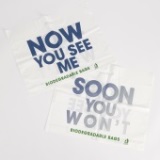
Common views on waste bags
Biodegradable Bin Liners - 50 Litre - 25 Bags
Biodegradable bin liners only work properly when the film is controlled well enough to cope with proper waste, not idealised test loads. A 50-litre liner has to resist puncture from wet food scraps, paper, cans and awkward corners, yet still dash cleanly through converting and survive being stacked, lifted and handled in a store. If the gauge drifts or the blend draws unevenly, weak spots appear where the seal or side weld carries the stress, and that soon shows up in torn bags and mess at the bin. Good film balance, sound seal quality and tight roll geometry all matter because they keep safe both the warehouse and the stop user. That sort of control is what turns a fragile-looking product into something fit for normal waste handling.
Rubble bags for kiln-dried hardwood have to survive much harsher treatment than a casual shopping sack, because angular billets can work through weak seams and turn a clean pack into a split load. A woven polythene suppliers building with enough strength in the material and stitching gives better resistance to drag on pallet boards, fork tines and rough handling in the yard. Bag shape matters only as much, since a square, stable cube stacks better and wastes less trailer space than a sagging pack that shifts in transit. The practical test is simple: if the bag retains the fuel dry and the load intact from dispatch to delivery, the packaging has done its job properly.
Waste sacks for clinical use have to be chosen with the same care as the waste they grasp, because a weak bag turns a routine assortment into a handling problem. The proper film gauge gives enough puncture resistance for sharps bins, dressings, and normal contaminated waste without making the sack so thick that it wastes material or slows sealing. Colour coding and transparent print assist sorting on the ward and in the depot, while consistent dimensions make pallet stacking and trolley loading less awkward. A sack that opens properly and seals cleanly also reduces spills amid dispatch and transport. Good specification saves trouble long after the bag has left the filling line.
Details about 1 Roll=30pcs Waste Kitchen Toilet Waste Rubbish Bins Clean up Rubbish Bags
Rubbish bags fail where the waste stream is hardest on them, not where the paperwork says they should perform. Wet kitchen waste, sharp carton edges and awkwardly shaped waste all put stress on the film, so a sound specification relies on the proper gauge, a stable polymer mix and enough puncture resistance to cope with proper handling. Poor extrusion control shows up fast as weak seams, stretch distortion or split corners when a sack is lifted from a bin. A bag that grasps its shape and seals properly saves mess on the floor and cuts the kind of handling damage that slows down cleaning and waste assortment.
Black Refuse Sacks
polythene suppliers waste sacks need the proper gauge for the job, because waste that sees harmless can still split a thin bag the moment it is lifted or dragged across a floor. Lighter sacks around 20 micron suit dry normal waste and short journeys from bin to skip, while thicker grades close 87.5 micron cope better with awkward, heavy or sharp contents that would test the film. Strength is not only about puncture resistance either; superb manufacturing gives steadier seal quality and a more even bag, so the sack performs properly in use. Matching the thickness to the waste retains handling damage down and reduces wasted stock.
Polybags Bin Liners
Bin liners need to match the bin if mess, wasted film, and awkward fitting are to be avoided. A liner that is also loose slips down into the container and leaves dirty edges exposed, while one that is also tight splits when the bag is pulled complimentary or when waste builds up unevenly. In production terms, the proper gauge, stretch, and seam strength matter as much as the stated size. Good liners also assist with faster changeovers in kitchens, washrooms, and waste stations because they stay open in the bin and lift out cleanly. A proper fit saves time and cuts handling damage at the point of disposal.
Bin Bags
Bin bags on a roll with tie handles suit busy packing and cleaning areas because they retain stock tidy and easy to issue. A roll format takes up less shelf space than loose sacks and makes stack handling simpler in a storeroom or cleaning trolley. Tie handles also improve close-out at the point of use, which assists reduce spill risk and makes loaded bags easier to transport to the waste point. The proper benefit is practical control: less rummaging, quicker replenishment, and less split loads left open around the site. That makes daily waste assortment more tidy and retains handling damage down.
Black sacks are being used less often in plenty homes because more material now goes into kerbside recycling and food waste assortments. That shift changes the demand pattern for waste sacks, since the bag is no longer carrying the same mixed load of heavy kitchen waste, packaging and strange bits of household waste. In practical terms, a thinner weekly flow of residual waste can mean less sacks needed, nevertheless it also puts more pressure on the sacks still in use to cope with sharp edges, damp waste and awkward loads without splitting. That makes sack strength, gauge and tie-off performance more relevant than simple volume. The safer come is to match the sack to the proper waste stream, because weak containment fast turns into handling mess.
1 Tonne Waste Bags
Single-trip one tonne waste bags manufactured from woven polypropylene transport heavy material well, nevertheless only if the bag selection matches the load and the handling method. The woven material gives decent strength for rubble, scrap, grain, or side products, yet weak filling practice can still split seams or distort the loops. A bag that is overfilled or dragged across rough concrete will not behave like a rigid container, so gulley edges, forks, and grab hooks matter as much as the material itself. Good filling height, proper closure, and sensible sling use retain the load stable. That is why the bag specification has to suit the job rather than only the nominal weight.
Heavy duty black sacks need to be built for rough handling, not only high paperwork strength, because the proper test comes when liners are dragged above bin rims, stuffed past the normal occupy line or pressed into service for mixed waste. A bag that feels thick nevertheless tears at the seal or splits close the bottom is poor value in any store room or cleaning cupboard. Good gauge control, the proper balance of stiffness and stretch, and a clean conversion process assist the sacks open properly from wall-fastened dispensers and retain each pull complimentary from snagging. That makes replenishment quicker, reduces handling damage and cuts the number of failed bags entering the waste stream.
Research & Resources
For more information on carrier bags, the wide range of polythene and biodegradable carriers available, their many uses and how to recycle them, please visit:
Goldstork: A free online 'best-of-the-web' directory listing specially selected information on a wide range of plain and printed carrier bags.
PackagingKnowledge: The UK's premier polythene packaging knowledge website, containing loads of useful information and in-depth articles on carrier bags, as read by those in the industry.
PlasticBags.uk.com: List products for free as a manufacturer or, if you're shopper, simply browse a massive selection of carrier bags websites on this unrivalled polythene packaging directory.
Single-use carriers? No such thing!
The carrier bag is often portrayed in the media as the single biggest cause of pollution and litter on the planet.
Most commonly, the high density polythene (HDPE) carrier bag used by supermarkets is singled out as the biggest culprit. These bags, which are subject to a government levy in many countries - meaning customer have to pay a few pence or cents for each bag they use - are often referred to as “single-use carriers”, which is a term that is not only misleading but also irresponsible.
Carrier bags should be reused as often as possible and by calling them “single-use carriers” - including in newspaper articles widely criticising the use of such bags - the implication is there that the bags should be thrown away.
This is giving entirely the wrong message to customers and does not represent the facts. 82% of UK households reuse over half of all carrier bags they use, with 59% reusing all of them (Waste Resources Action Programme report, 2005).
There are so many things you can do with a carrier bag once you’ve used it to carry your shopping home. The most obvious is to take it back to the shop and use it again for its original purpose - to carry shopping! But you can also use carrier bags for wrapping your packed lunch, or as a portable laundry bag when you go on holiday, or wrapping shoes in a suitcase to keep your clothes clean. There are loads of things you can use it for if you put your mind to it, so use your carriers again and again.
Even when your carrier has seen better days and you’re ready to throw it out, you can give it one final hurrah and use it as a rubbish bag before throwing it in the bin. There’s no such thing as a single use carrier bag - at least there shouldn’t be!